Paris Blockchain Week highlighted the strategy adopted by global leaders in the crypto-asset sector, who are using regulation as a tool to shape and control the European digital market. This approach favors players with significant resources, thereby creating a de facto regulatory oligopoly.
At Paris Blockchain Week (PBW), just steps away from the Louvre’s inverted pyramid, global leaders in crypto-assets have stopped viewing regulation as a constraint. All have adopted the “regulation-as-weapon” strategy, aiming to use regulatory frameworks as a tool for market exclusion. In Europe, their weapon of mass destruction for eliminating unbridled competition is called MiCA. This European regulation, which governs crypto-assets, their issuance, and related services within the EU, has clearly transformed into a brutal selection mechanism.
Piling Up Regulation to Eliminate
Speaking at a press conference open to the public, OKX’s head of European operations, Erald Ghoos, made a striking observation. 80% of European crypto exchanges will disappear under the weight of a regulatory burden deemed insurmountable.
This is a prediction that major players in the sector, such as OKX1, have been anticipating for months, even years, adapting their strategies to capitalize on the new regulatory landscape.
By transforming this regulatory burden into a powerful strategic asset, digital asset unicorns are creating a chasm of complexity and cost. This chasm is so deep that only companies capable of committing significant resources can hope to cross it. Stuck on the other side, the rest will disappear in the face of this accumulation of legal barriers, which effectively creates an oligopoly.
In Europe, to hope to survive or thrive in the tokenized digital finance landscape of tomorrow, a player must piece together disparate regulatory building blocks: MiCA for digital assets, MiFID II for financial instruments including derivatives, DORA for digital resilience, and the GDPR for personal data management. This multi-layered structure acts as a filter.
Mid-sized players, unable to bear the internal or external costs of compliance, are being pushed out of the market, leaving the field open to a handful of systemic giants. Such is the world of digital assets!
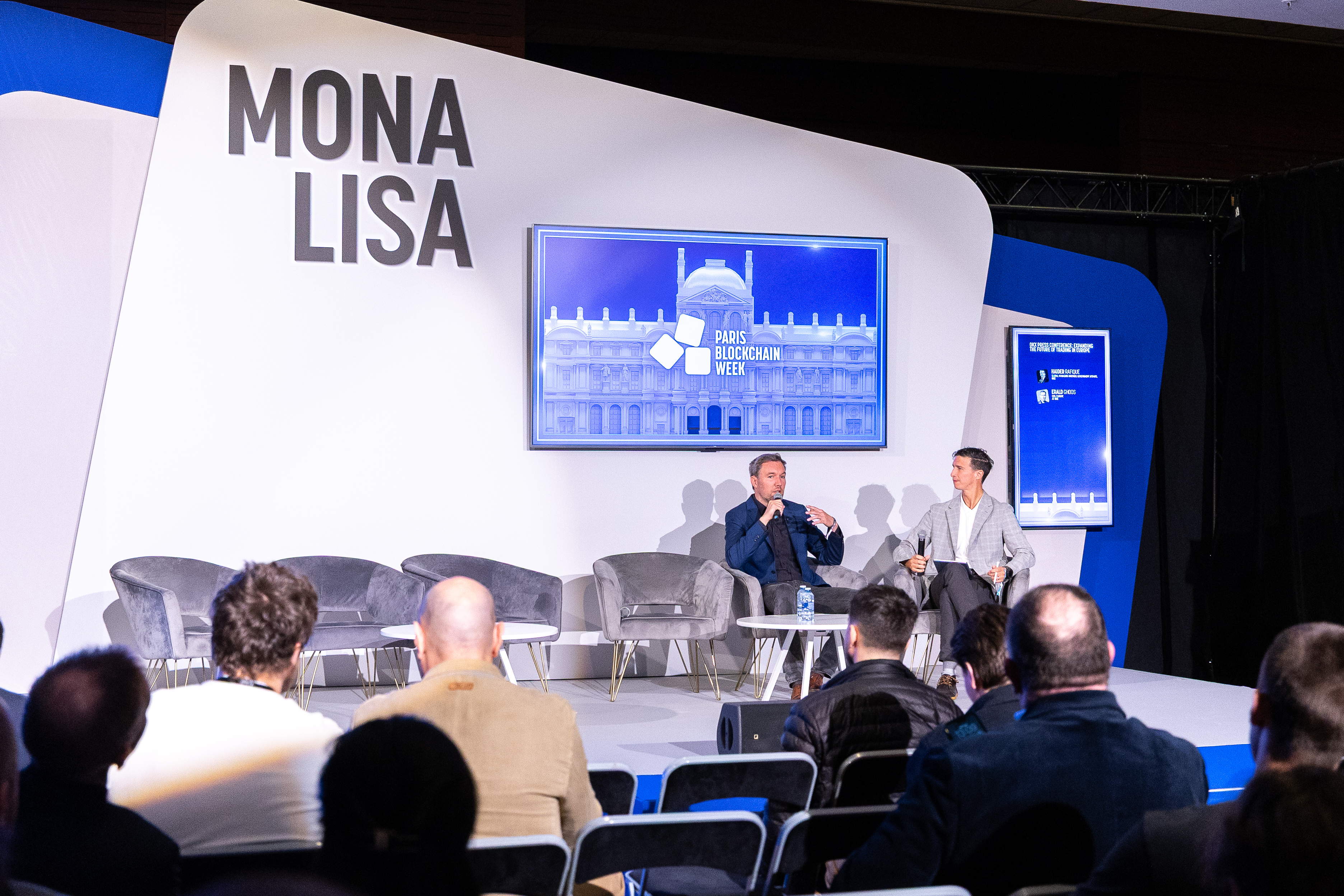
“In the last year, I would say, a lot of the local and smaller competitors, they have come knocking on our door asking to be acquired, saying like : Look, the whole regulatory burden of MiCA, it's heavy for us. We don't have the right tech stack, we don't have the right security features, we don't have the right infrastructure to compete with some of the global exchanges”.
The Pact of Twelve
Another player present at the PBW embodies this trend: Qivalis. This consortium brings together twelve leading banks, including BNP Paribas, BBVA, and UniCredit.
Their goal is to launch an Electronic Money Token (EMT), in other words, a stablecoin pegged to the euro. Speaking from the Mona Lisa stage on Wednesday, April 15, Jan-Oliver Sell, head of Qivalis, confirmed that his organization is currently engaged in a process with the Dutch Central Bank to obtain an Electronic Money Institution (EMI) license.
A true key to success, this license is at the heart of its strategy. It grants the right to issue the coveted EMT, an asset strictly regulated by the European MiCA regulation. It is clear that the consortium’s partner banks also want to secure access to the digital euro market at their own level through a complex set of licenses that are difficult to obtain and even harder to leverage at scale.
The goal for these institutions is to have an on-chain representation of the euro with deep liquidity, thereby avoiding reliance on the U.S. dollar when using decentralized protocols or cross-border settlement solutions operating on blockchain networks.
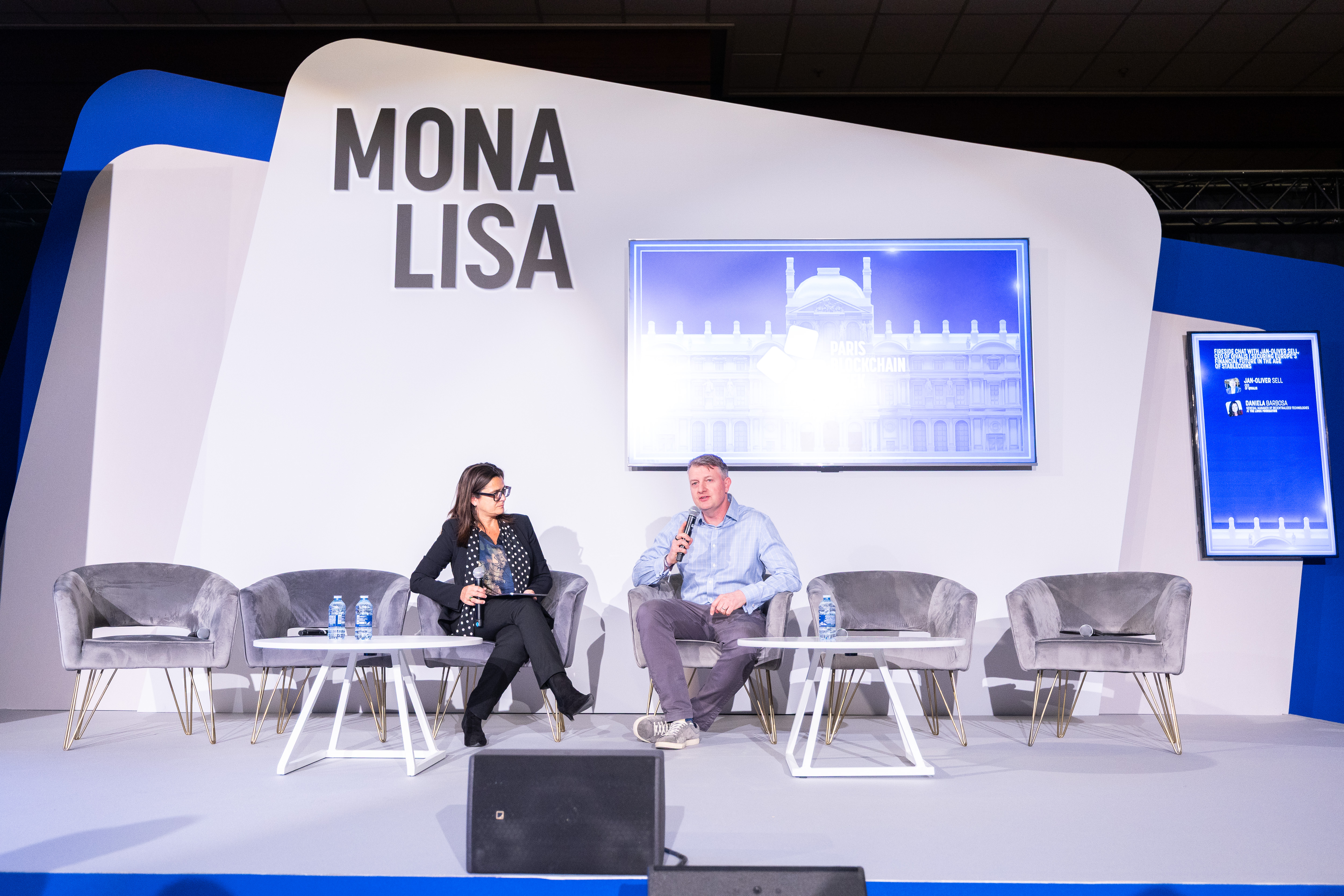
“I think the big advantage that we have is that over time, as banks join the consortium, we have a network of users and clients who will bring institutional-level liquidity into the token. And so over time, I think we have a certain advantage there that will allow us to become the leader in this space.”
The Gold of São Paulo
Seated comfortably like a sovereign on the Master Stage, commanding his audience, Ben Zhou, CEO and co-founder of the Bybit platform2, drives the point home.
The native of Hangzhou, China, now based in Dubai with his company, no longer views regulation as an obstacle, but as a foundation of trust. This is seen as indispensable to serving the goal of a global financial platform, connecting traditional finance and tokenized assets.
In Paris, the man who studied in the United States isn’t content to just stop by the Carrousel du Louvre. Ben Zhou (BZ) is primarily there to meet with French regulators. By his own admission, Paris is just one stop on his global regulatory tour. Much like CZ3 in his day, BZ is crisscrossing the globe with a proactive approach, leveraging his relationships with authorities as a key driver of growth and influence. A decisive advantage, in his view.
Ben Zhou has thus radically transformed his group’s approach, shifting from a model focused purely on trading during the crypto “Wild West” era of 2014 to 2018 to a strategy where compliance is now the primary driver of growth.
Today, his company, which officially claims over 82 million users in 181 countries, operates an infrastructure connected to more than 2,000 local banks across the globe. The co-founder explains that this connectivity relies on a distribution of licenses in each key jurisdiction.
This patiently and powerfully woven network enables the processing of transaction flows of a previously unseen nature. Now, a Brazilian family office can convert physically held gold in Brazil into a digital yield in Hong Kong through Bybit’s regulated channels.
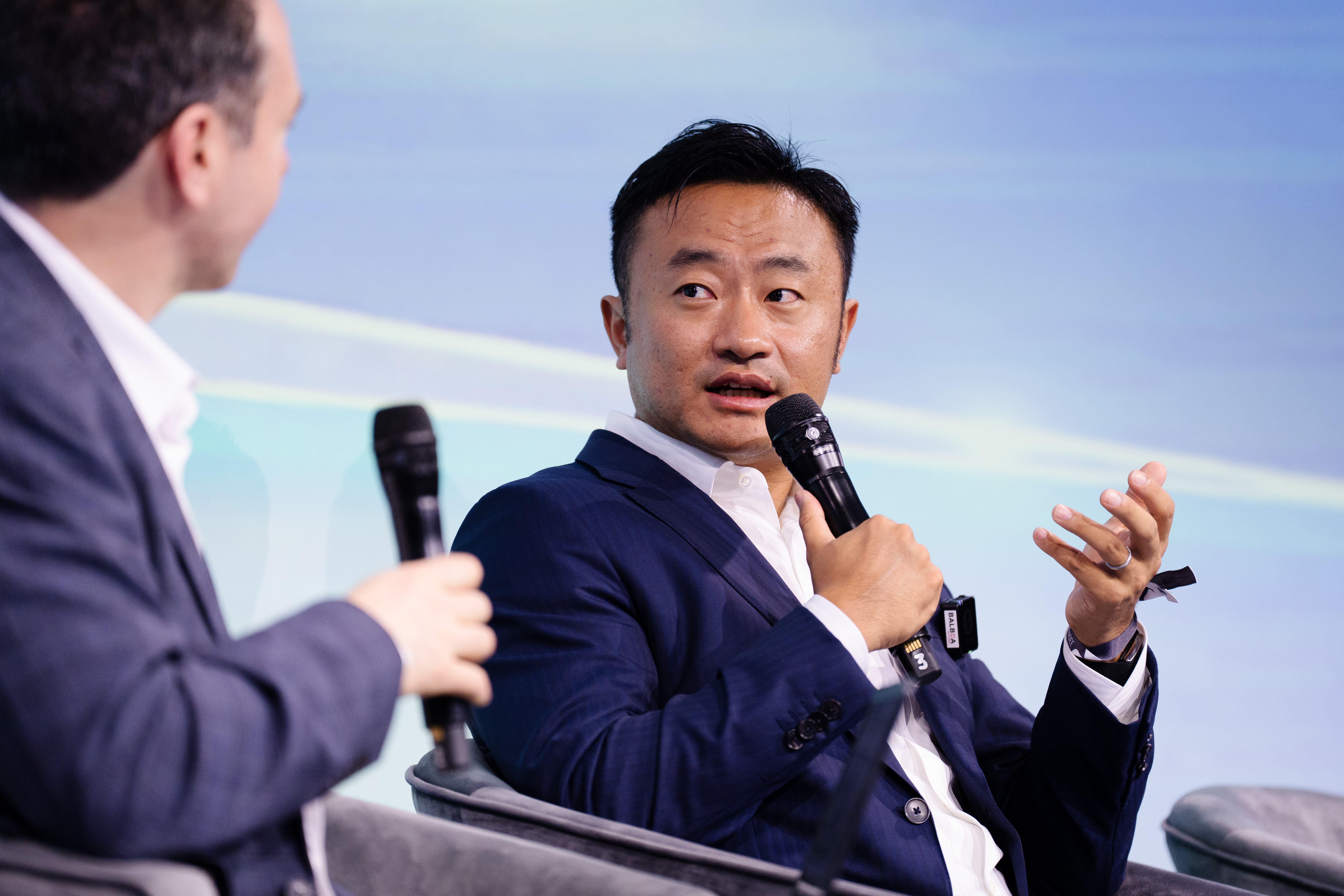
“While I'm here in Paris, I just met the regulators and I go around the world, meet lot of regulators. The way they see crypto exchange now, today, especially Bybit, is our global distribution power. We have licenses in almost every continent, many countries in the world from Turkey to Brazil to Indonesia to Thailand to EU where we're licensed here.”
Locking Down the World
eToro4 shares many similarities with Bybit, although the publicly traded neo-broker did not originate from the crypto sector. When Yoni Assia takes the stage at PBW, the founder and CEO of eToro presents his company first and foremost as a regulated financial institution that has gradually integrated crypto-assets into its services.
His goal: to serve investors who wish to trade stocks, precious metals, and digital assets on a single interface, operating 24/7. Obtaining licenses makes it possible to offer this seamless experience.
Regulation becomes the lubricant that allows assets of different types to circulate within the same system, a system that must be locked down to prevent any leakage of liquidity to unregulated protocols. This lockdown consolidates the power of those who hold the keys to the front door. It is typically for this reason that eToro acquired ZenGo to integrate a self-custody wallet solution under a regulated umbrella.
This move aims to counter the threat of disintermediation posed by decentralized finance (DeFi). By standardizing their onboarding interface, these giants ensure that every move toward DeFi passes through their compliance filters.
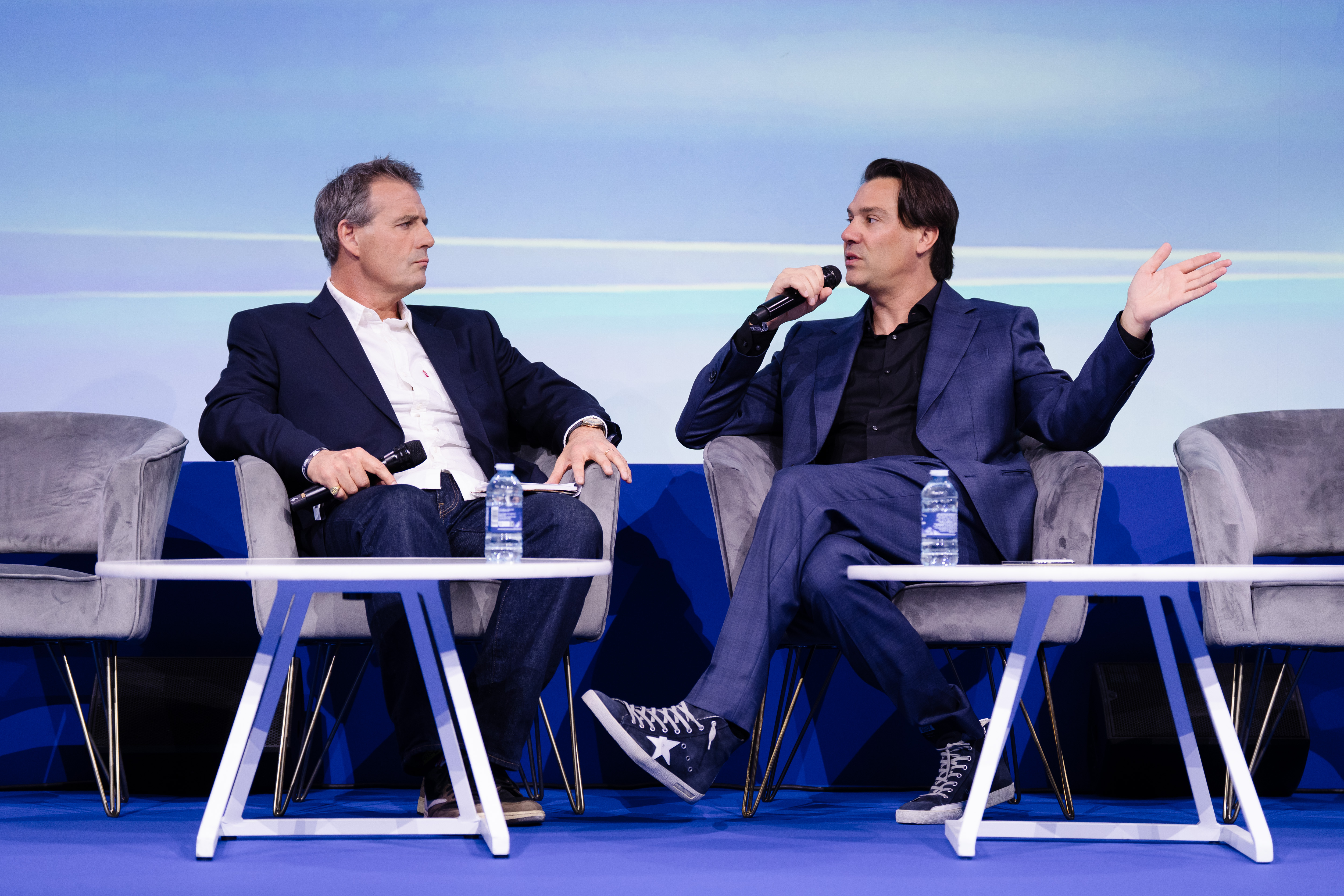
“I’m very excited about that convergence, which I see here a lot, across between DeFi and TradFi. And now we’re basically accelerating our path into DeFi with the acquisition of ZenGo, bringing a lot of crypto-native, DeFi-native customers into the eToro ecosystem.”
The Rise of Machines
With the tsunami of artificial intelligence, agent-based systems represent the next stage in this consolidation of power.
Eric Anziani, President and COO of Crypto.com5, is preparing his systems for direct interaction with these new types of machines. In this world, the AI agent is the customer. It will choose its provider based on the robustness of its regulatory compliance API.
If a platform cannot, for example, validate the legal identity of an AI agent in real time, it will be ignored by the system. Compliance here becomes an essential software component for executing any operation. Regulation is transforming into a mandatory programming language for the machine economy.
The players who standardize regulated access for AI agents will dominate global distribution in the years to come. The power lies in this ability to make the law invisible and automatic within the software.
Crypto.com has already secured strategic positions. Its co-founder, Kris Marszalek, launched ai.com in February, a platform for creating AI agents. With ai.com, anyone can now generate a private, personal AI agent in just a few clicks, bypassing any technical barriers.
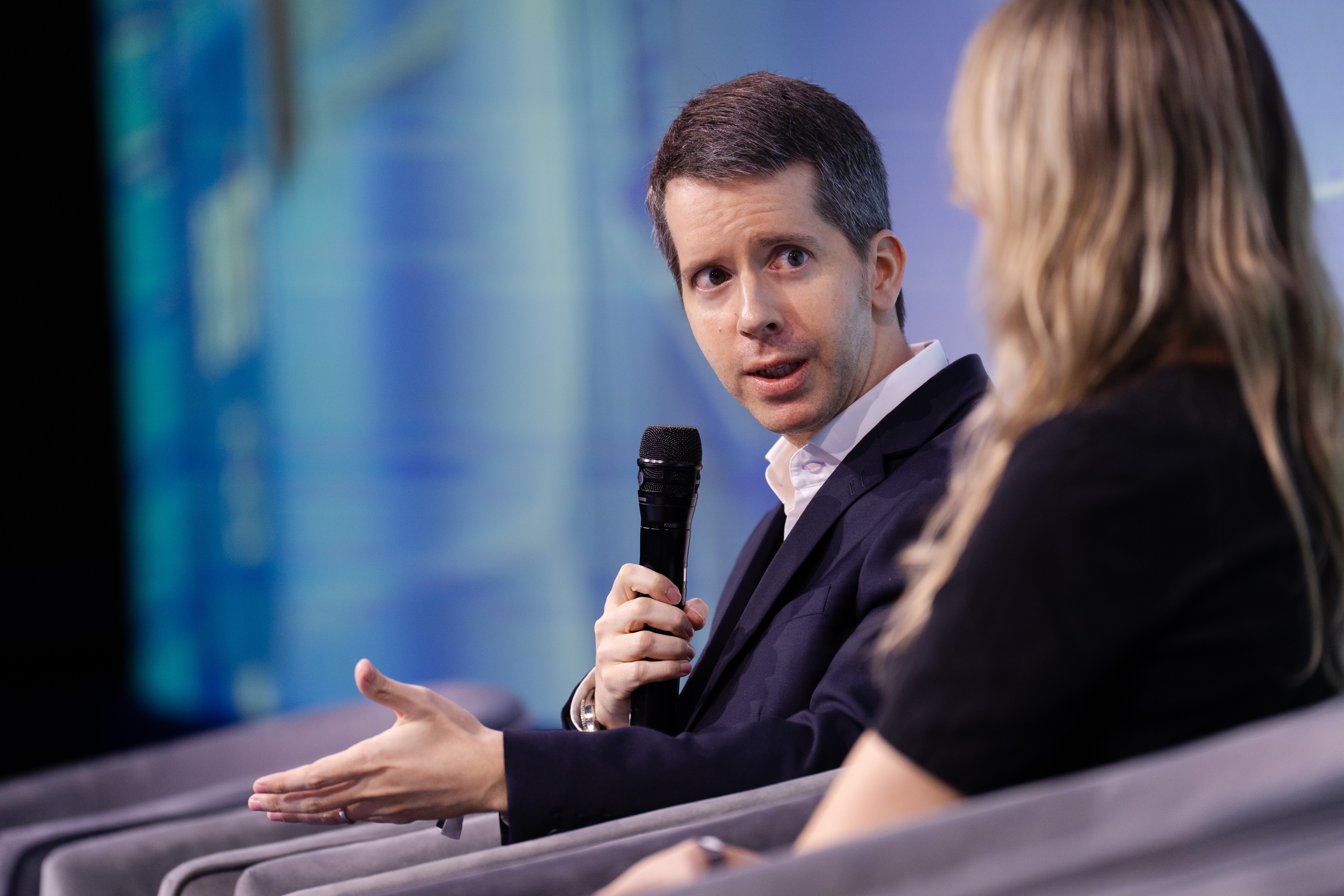
“If you look at the future, this Super App model for me will compress, and you'll just have an agent that can do everything. So the agent becomes the Super App. You don't need to have so many different icons. You just have one voice or one icon where you tell him : I want to do this, I want to call a taxi, I want to book my travel. I don't need to have a Super App anymore. The agent is the Super App. At the end, if you want to be in control of your destiny, you need to own the relationship with the customers.”
NOTES
1 OkX Europe Limited, operating under the trade name OKX, is a crypto-asset trading platform licensed as a Crypto-Asset Service Provider by the MFSA in accordance with Article 28 of the Crypto-Asset Markets Act (Chapter 647 of the Laws of Malta).
2 Bybit is a cryptocurrency exchange founded in 2018, initially specializing in derivatives, and later expanding to offer a more comprehensive range of crypto services. Based in Dubai, the company has a strengthened presence in Europe through its licenses in Vienna and Cyprus.
3 Changpeng Zhao, founder and former CEO of Binance. Nicknamed CZ.
4 Founded in 2007, eToro employs 1,520 people and has a market capitalization of $3.14 billion.
5 Crypto.com is a major player in crypto services, active in exchange, payments, and DeFi through its Cronos blockchain.