Recherche
5 résultat(s) trouvé(s)
Germany – A change of strategy for a new geopolitical power
For nearly thirty years, Germany prioritised economic prosperity over a genuine geopolitical strategy. Its model rested on three pillars: American protection, Russian energy and Chinese markets. In a stable international environment, this framework enabled Germany to exert its influence primarily through the economy, whilst maintaining a doctrine of military restraint. However, recent geopolitical...
 Paola
MONPERRUS-VERONI
Paola
MONPERRUS-VERONI
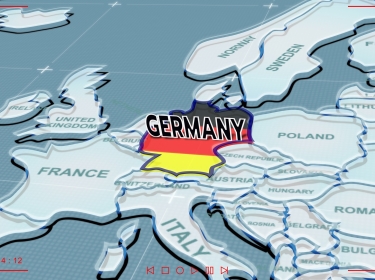
German industry – Facing China: a model under pressure
After two decades of relative prosperity, Germany’s strategy based on free trade and its integration into international value chains is facing growing geo-economic fragmentation, Sino-American rivalry, the race for low-carbon technologies and the energy transition in industry. This new landscape has altered the factors determining Germany’s industrial competitiveness in the face of an increasingly...
2026-2027 Scenario – Euro area: Domestic factors are keeping the risk of recession at bay
This scenario is set against a backdrop of military, political and economic uncertainty that makes forecasting the scale of shocks and their macroeconomic impact particularly risky. But one thing is certain: the tightening of external constraints on the Eurozone, which is facing more volatile prices on global energy markets. Whilst, unlike in 2022, the risk is less one of shortages, its vulnerability to...

Europe –2026-2027 Scenario: fiscal policy as a resistance tool
In an uncertain environment posing challenges to competitiveness and unable to rely on external demand, European economies are managing to accelerate activity at a pace in line with their potential. Whether through measures to facilitate disinflation or support for private and public investment, fiscal stimulus is coming to the rescue, while central banks are taking a break, with inflation fully under...

 Sofia
TOZY
Sofia
TOZY
 Ticiano
BRUNELLO
Ticiano
BRUNELLO
 Slavena
NAZAROVA
Slavena
NAZAROVA

Europe – 2025-2026 Scenario: headwinds are easing, but new ones are emerging
Against a backdrop of global growth that has been surprisingly resilient, Western European economies are showing resilience, albeit at varying rates. The economies at the core of the Eurozone, particularly Germany, are showing sluggish growth at best, while the Iberian economies are being buoyed by strong private consumption and investment, the latter supported by funds from the European Recovery and...