Recherche
8 résultat(s) trouvé(s)
Germany – A change of strategy for a new geopolitical power
For nearly thirty years, Germany prioritised economic prosperity over a genuine geopolitical strategy. Its model rested on three pillars: American protection, Russian energy and Chinese markets. In a stable international environment, this framework enabled Germany to exert its influence primarily through the economy, whilst maintaining a doctrine of military restraint. However, recent geopolitical...
 Paola
MONPERRUS-VERONI
Paola
MONPERRUS-VERONI
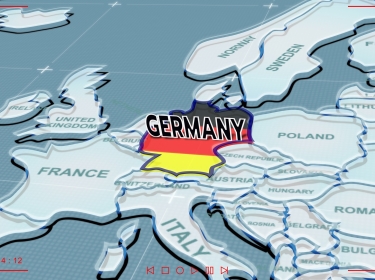
Allemagne – Changement de stratégie pour une nouvelle puissance géopolitique
Pendant près de trente ans, l’Allemagne a privilégié la prospérité économique plutôt qu’une véritable stratégie géopolitique. Son modèle reposait sur trois piliers : la protection américaine, l’énergie russe et les débouchés chinois. Dans un environnement international stable, cette architecture lui permettait d’exercer son influence principalement par l’économie, tout en maintenant une doctrine de...
Industrie allemande – Face à la Chine, un modèle sous pression
Après deux décennies de relative prospérité, la stratégie allemande fondée sur le libre-échange et son intégration dans les chaînes de valeur internationales est confrontée à une fragmentation géoéconomique croissante, la rivalité sino-américaine, la course aux technologies bas carbone et la transition énergétique de l’industrie. Ce nouveau cadre a modifié les déterminants de la compétitivité...
Immobilier résidentiel – Le vieillissement démographique atténuera-t-il la pénurie de logements en Allemagne ?
Le 20 septembre 2026, Die Linke est arrivée en tête de l’élection régionale à Berlin, une première pour le parti de gauche radicale dans la capitale. La crise du logement était au cœur de la campagne de Die Linke et cette victoire traduit l’exaspération des Berlinois face à la flambée des loyers et aux difficultés d’accès au logement. Le marché immobilier allemand fait en effet face à des contraintes...
 Juba
IHADDADEN
Juba
IHADDADEN
 Ivana
TERLEVIC
Ivana
TERLEVIC
German industry – Facing China: a model under pressure
After two decades of relative prosperity, Germany’s strategy based on free trade and its integration into international value chains is facing growing geo-economic fragmentation, Sino-American rivalry, the race for low-carbon technologies and the energy transition in industry. This new landscape has altered the factors determining Germany’s industrial competitiveness in the face of an increasingly...
Residential real estate – Will demographic aging alleviate the housing shortage in Germany?
On September 20, 2026, Die Linke won the regional election in Berlin, a first for the radical left-wing party in the capital. The housing crisis was at the heart of Die Linke’s campaign, and this victory reflects Berliners’ frustration with skyrocketing rents and difficulties in accessing housing. The German housing market is indeed facing significant cyclical and structural constraints, which today...
Insight – From revival to rebuilding
At the turn of the 2000s, Germany was regarded as the ‘sick man’ of the euro area. Facing high unemployment rates, sluggish growth and public finances weakened by the cost of reunification, the country seemed destined for a slow relative decline. Yet, within a decade, it managed to reinvent itself to become Europe’s main economic driving force.
 Isabelle
JOB-BAZILLE
Isabelle
JOB-BAZILLE

Point de vue – Allemagne, de la renaissance à la refondation
Au tournant des années 2000, l’Allemagne était considérée comme « l’homme malade » de la zone euro. Confronté à un chômage élevé, à une croissance atone et à des finances publiques fragilisées par le coût de la réunification, le pays semblait voué à un lent déclin relatif. Pourtant, en l’espace d’une décennie, il est parvenu à se réinventer pour devenir la principale locomotive économique de l’Europe.