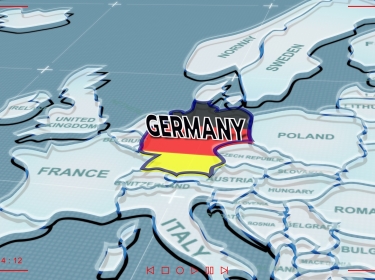
At the turn of the 2000s, Germany was regarded as the ‘sick man’ of the euro area. Facing high unemployment rates, sluggish growth and public finances weakened by the cost of reunification, the country seemed destined for a slow relative decline. Yet, within a decade, it managed to reinvent itself to become Europe’s main economic driving force.
In a country where prosperity is closely linked to the competitiveness of its industry (21 per cent of German GDP, compared with 9.7 per cent in France), restoring this competitiveness became a strategic priority. With this in mind, Gerhard Schröder’s government launched a wide-ranging programme of reforms, known as ‘Agenda 2010’. The Hartz laws, supplemented by pension reform, a reduction in employers’ social security contributions and a policy of wage moderation, increased labour market flexibility and contributed to the recovery of the German economy. However, this success cannot be attributed solely to labour market reforms, as Germany also benefited from a favourable economic climate. The sectoral specialisation of German industry in high-end motor vehicles and intermediate capital goods perfectly met the surge in demand from emerging economies, led by China, with its enormous investment needs and the emergence of a prosperous middle class keen on large saloon cars ‘made in Germany’. The entire industry, and particularly the most energy-intensive sectors such as chemicals and steel, benefited from access to cheap energy, notably gas from Russia (55 per cent of gas consumed). Then, following the fall of the ‘Iron Curtain’, reunification (1990) provided access to an abundant, low-skilled and cheap labour force from the former East Germany. The Hartz reforms institutionalised this opportunity through ‘mini-’ and ‘midi-’ jobs – marginal, low-paid roles with flexible hours and limited social security cover. These schemes enabled the mass employment of this workforce from the new Länder, particularly in the service sector. The eastward enlargement of the European Union also enabled German industrialists to develop a low-cost subcontracting network in Central Europe. These factors were complemented by structural strengths: high-quality social dialogue, long-term-oriented Rhenish capitalism, and efficient regional ecosystems centred on the Mittelstand. Germany’s success thus appears to be the result of a coherent economic model, rooted in the country’s history and culture and buoyed by favourable conditions.

CitationNevertheless, since the early 2020s, this model has been showing signs of running out of steam. Weakened by a succession of shocks, the main pillars of the German economy are gradually crumbling, calling into question the very foundations of its past success.
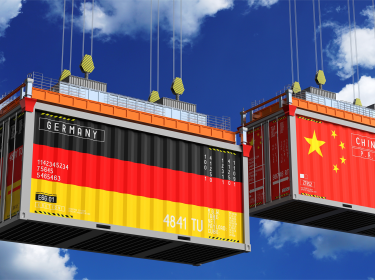
The invasion of Ukraine has put an end to one of German industry’s competitive advantages: access to abundant and cheap Russian gas. At the same time, the automotive sector – the historic gem of German industry – is undergoing a profound crisis, the repercussions of which are set to be considerable for employment in a sector that provides a livelihood for nearly 8.5 million people. Having long dominated the internal combustion engine market, German manufacturers were slow to make the transition to electric vehicles, allowing new competitors – notably from China – to emerge and rapidly gain market share in this growing sector. Furthermore, rising geopolitical tensions and the slowdown in globalisation are undermining an economy whose growth model relies heavily on exports (44 per cent of GDP). Long driven by the dynamism of global markets, Germany must now contend with a China that has become a formidable competitor rather than merely a market, whilst the United States is stepping up its protectionism by introducing tariff barriers. Finally, despite its past economic performance, Germany has underinvested in its infrastructure, the digital transition and innovation. Private investment remains below its pre-global-financial-crisis level, and the culture of fiscal orthodoxy, epitomised by the ‘debt brake’, has long stifled public investment.
Ultimately, the driving forces behind Germany’s success over the past two decades are now a thing of the past. The era of cheap Russian gas, successful globalisation and the dividends derived from its industrial specialisation is over. Yet, Germany retains solid foundations: a powerful industrial base, high-quality human capital, potential for innovation and the financial resources to invest in its future. Having been first the ‘sick man of Europe’ and then its driving force, Germany must now rise to a new challenge: to embrace radical change in order to reinvent the foundations of its power in a profoundly transformed world.
Ultimately, the driving forces behind Germany’s success over the past two decades are now a thing of the past. The era of cheap Russian gas, successful globalisation and the dividends derived from its industrial specialisation is over. Yet, Germany retains solid foundations: a powerful industrial base, high-quality human capital, potential for innovation and the financial resources to invest in its future. Having been first the ‘sick man of Europe’ and then its driving force, Germany must now rise to a new challenge: to embrace radical change in order to reinvent the foundations of its power in a profoundly transformed world.