Sommaire
1. Trends in the Residential Real Estate Market Since the 2000s
2. The construction sector is struggling to meet housing needs
3. A housing stock ill-suited to changes in long-term demand
4. Is the “Bau-Turbo” a Solution?
1. Trends in the Residential Real Estate Market Since the 2000s
2. The construction sector is struggling to meet housing needs
3. A housing stock ill-suited to changes in long-term demand
4. Is the “Bau-Turbo” a Solution?
On September 20, 2026, Die Linke won the regional election in Berlin, a first for the radical left-wing party in the capital. The housing crisis was at the heart of Die Linke’s campaign, and this victory reflects Berliners’ frustration with skyrocketing rents and difficulties in accessing housing. The German housing market is indeed facing significant cyclical and structural constraints, which today result in an estimated shortage of 1.4 million housing units, a continuous rise in rents, and an insufficient supply of affordable housing.

CitationThe construction sector is struggling to address an estimated housing shortage of 1.4 million units by 2024, limiting housing affordability for households, particularly in major cities.
Following the boom of the 1990s, the German housing market remained stable in the early 2000s, in contrast to the sharp increases seen in other major European countries. This stability can be attributed to an abundant housing stock at the time, a legacy of post-reunification investments, slowing population growth, a prudent lending system, and public policies favoring renting.
The 2010s were marked by an unprecedented upward cycle in housing prices. Historically, low interest rates, a strong labor market, and sustained labor immigration fueled strong demand, which was, however, constrained by a rigid supply. As a result, home ownership became difficult to achieve: the share of owner-occupiers fell from 53.2% to 46.5% between 2010 and 2022. Urban rents doubled between 2015 and 2025, prompting the government to tighten rent controls.
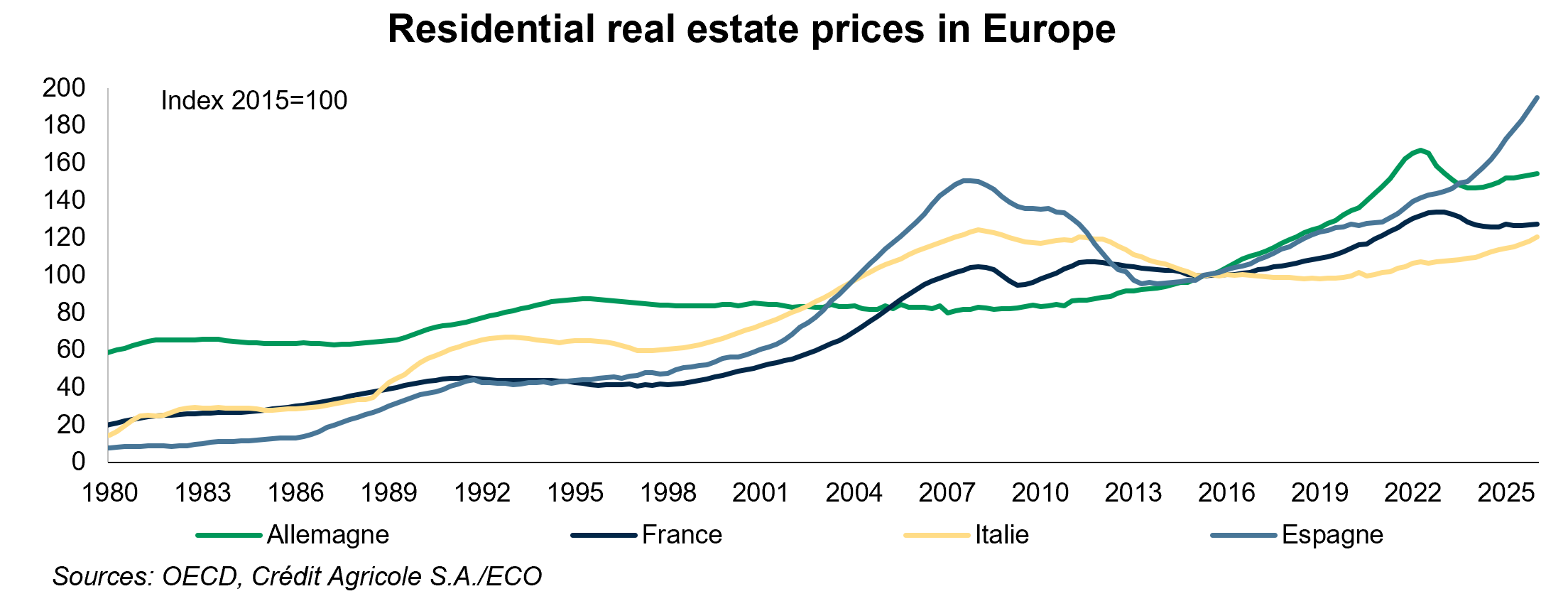
In 2022, high inflation and a rapid rise in interest rates put a halt to this trend: prices fell by 8.4% in 2023, and many households unable to afford homeownership turned to renting. But after two years of correction, prices begin to rise again starting in 2024, supported by stable employment, disinflation, and rising real wages. In 2026, prices continue to rise (+1.2% in Q1 compared to Q1 2025 and +0.6% in Q2) but remain more than 8% below the 2022 peak.
Residential construction is struggling to recover after years of recession. Building permits have been on the rise since 2025 (+12% in January–July 2026 compared to the same period in 2025) but remain well below their pre-price-drop levels (-33% compared to January–July 20211). New housing completions are expected to hit bottom in 2026, followed by a very gradual recovery in 2027 and 20282.
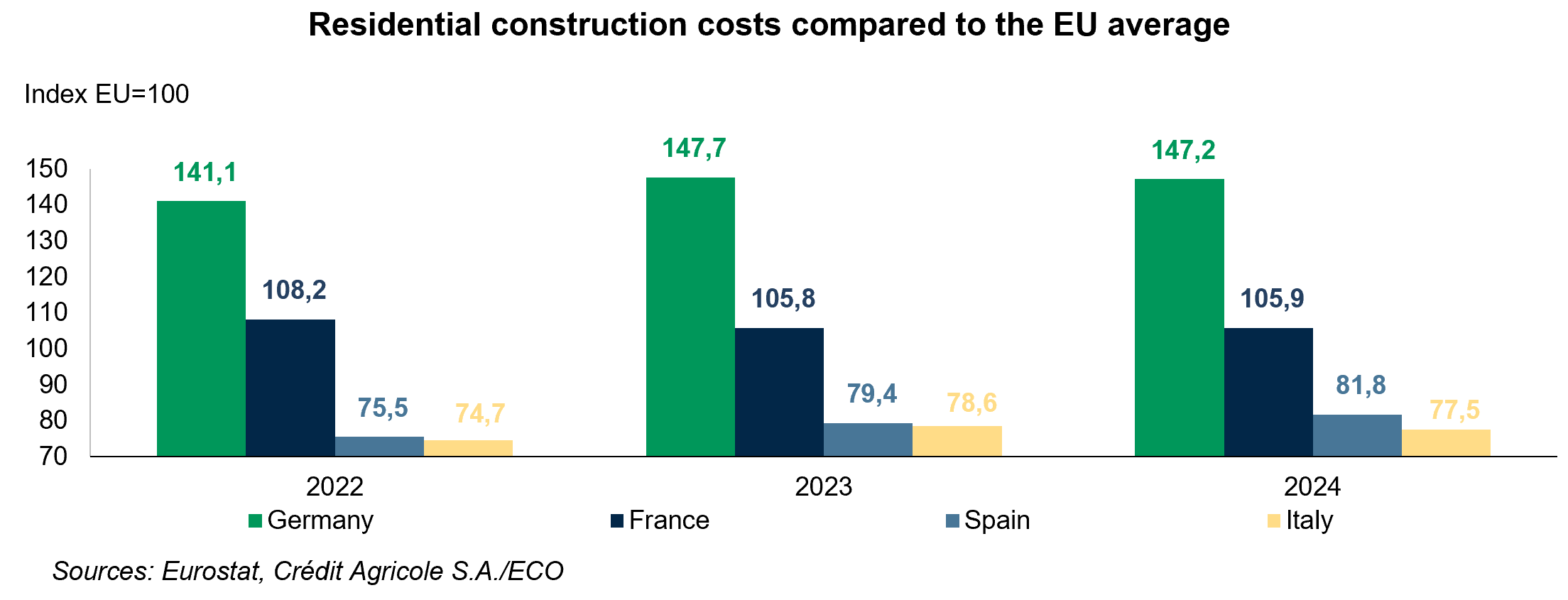
Construction costs are a major obstacle: up 21.5%3 between 2021 and 2025, they are the highest in the EU.
In urban areas, the scarcity of buildable land constrains the expansion of the residential stock and fuels price increases. While 85% of the identified construction potential4, would rely on internal densification, this approach faces lengthy planning procedures, limited administrative capacities at the municipal level, citizen resistance (NIMBY effect), and speculative land retention, whereby continued land appreciation discourages owners from selling. Regulatory standards further drive-up construction costs: in the absence of an exhaustive legal definition of these standards, builders apply the most stringent requirements as a precautionary measure. Energy performance requirements, governed by the Building Modernisation Act (GModG), add to these constraints, although the government partially relaxed its provisions on heating systems in July 2026.
As a result, the construction sector is struggling to address an estimated housing shortage of 1.4 million units by 20245, limiting housing affordability for households, particularly in major cities.
By the end of 2025, Germany had a population of 83.5 million. In the central scenario of the demographic projections6, the population is projected to decline by 3.7% between 2025 and 2045. In all scenarios considered, the proportion of people aged 67 and older is expected to increase.
Despite this demographic decline, housing demand will continue to grow due to a slight increase in the number of households between 2022 and 2045 (+560,000) and the geographic mismatch in supply. According to the BBSR7, demand will be concentrated in urban and economically attractive areas, where housing vacancy rates are low. The number of households is projected to decline by 4.4% in the former GDR8 and increase by 2.8% in the former FRG9. When also considering housing that cannot be technically or economically renovated10 to achieve climate neutrality, the Pestel Institute projects construction requirements exceeding 300,000 homes annually by 2050The Pestel Institute forecasts a need to build more than 300,000 housing units per year by 205011.
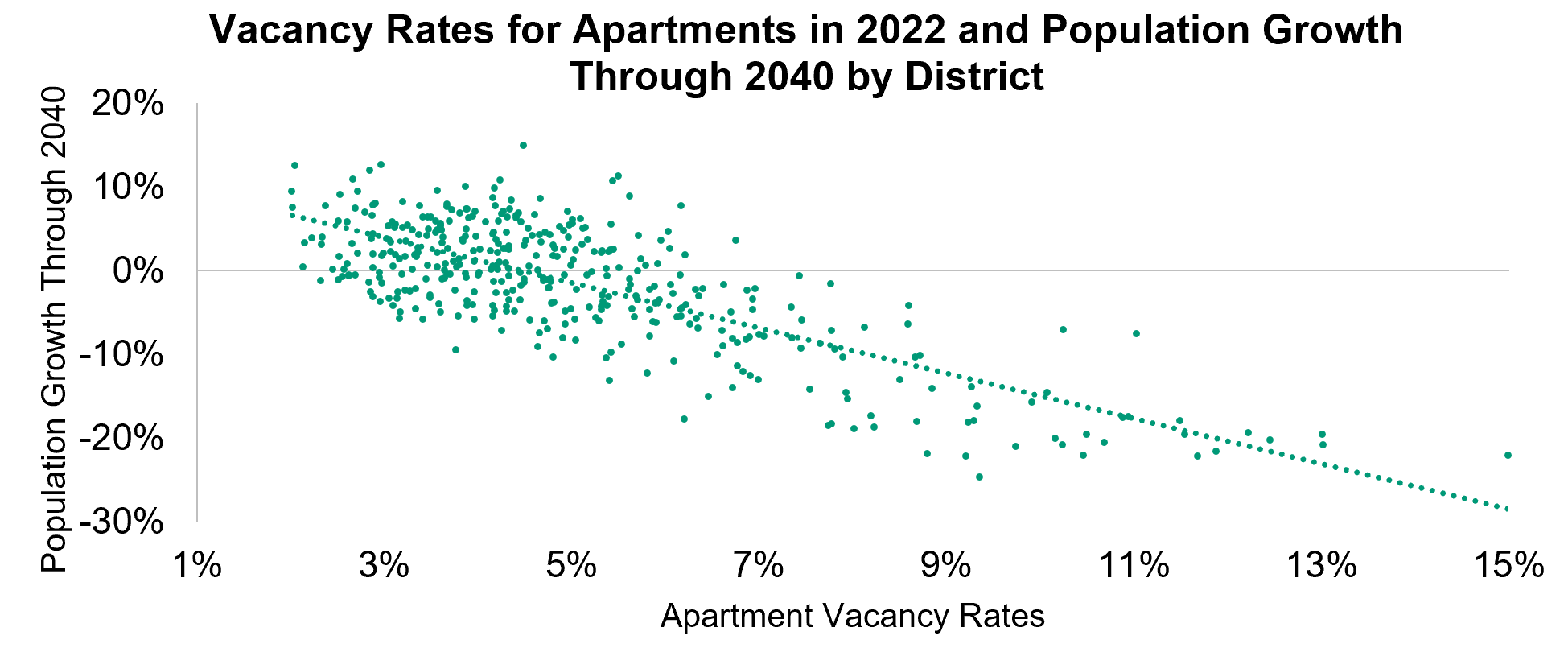
Figure: Each data point represents one of Germany’s districts12, with the x-axis showing the vacancy rate for apartments and the y-axis showing population growth. The graph shows that the districts with the highest vacancy rates are those where the population is declining and, conversely, the districts with the highest population growth have very low vacancy rates.
To promote housing construction, the Merz administration proposed the “Bau-Turbo,” which took effect in October 2025. The plan gives municipalities greater flexibility in managing residential areas. They will now be able to approve residential projects in zones not designated for construction. Exemptions from urban development plans will allow for the creation of housing through building height increases, extensions, or “second-row” construction. The timeframe for issuing permits has been reduced to 3 months, with automatic approval granted in the absence of a decision.
While the plan aims to boost residential construction, it does not provide specific solutions to the affordable housing crisis facing Germans. Indeed, increasing construction alone is not enough to lower rents: demand may remain too high for supply alone to rebalance the market. This shortfall constitutes a significant economic obstacle for young working adults seeking housing.