Recherche
11 résultat(s) trouvé(s)
Automotive industry – The German sector in the face of change
For over a century, the automotive industry has been one of the cornerstones of Germany’s industrial strength. Driven by globally recognised brands such as Volkswagen, Mercedes-Benz, BMW and Audi, Germany has established itself as Europe’s leading car manufacturer.
 Veronique
VIGNER
Energy – An energy giant within the European Union
Germany is Europe’s largest energy consumer, ahead of France. It is the largest consumer of crude oil, at nearly two million barrels per day, and has the largest refining capacity in the European Union, whilst also being the EU’s largest consumer of natural gas (around 80 billion cubic metres per year) and coal (around 440 TWh per year).
 Stephane
FERDRIN
Renewable energy – 25 years of the Energiewende: how has it fared in Germany?
Twenty-five years after the launch of the Energiewende, Germany has established itself as Europe’s leading producer of renewable electricity. However, the overall picture remains mixed, with the energy system still reliant on fossil fuels for 75 per cent of gross final energy consumption. The success in the electricity sector has therefore not yet been extended to the system as a whole, raising questions...


 Vincent
GUEGANIC
World – Scenario 2026-2027: layers of risk are piling up
Geopolitical events continue to shape the economic and financial outlook, primarily through energy prices.
 Catherine
LEBOUGRE
World – Scenario 2026-2027: Another highly contingent scenario
First, we must make assumptions about the conflict in the Persian Gulf, which in turn shapeq the energy price scenario that feeds into inflation forecasts; then we must assess any second-round effects; and finally, we must map out growth trajectories.
The urgent case for a truly integrated European energy system
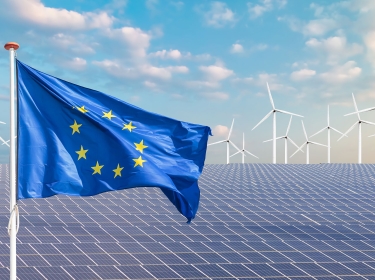
The succession of recent crises – the Covid pandemic, the war in Ukraine and now the conflict in the Middle East – has put energy back at the top of the agenda, no longer solely from an environmental perspective but as a fundamental driver of Europe’s economic power, with major implications for sovereignty and industrial competitiveness.
 Isabelle
JOB-BAZILLE
World – Scenario 2026-2027: highly subject to change
The powerful political and geopolitical consequences of the conflict in the Middle East will extend far beyond the more immediate ones that this scenario aims to identify. This conflict is not an isolated incident, but rather it is part of a series of supply shocks (the Covid pandemic, the war in Ukraine, Houthi attacks) that highlight critical dependencies on a few key chokepoints (eg, commodities...
World – Scenario 2026-2027: counting on fiscal policy support to counterbalance adversity
Against a backdrop of ongoing geopolitical uncertainty, but with the US trade fog lifting, growth rates are expected to remain steady or even pick up. Fiscal measures will contribute to this resilience in a variety of ways: from tax cuts in the US to aggressive fiscal policy in Japan, via Keynesian stimulus in the UK and spending linked to the NGEU plan on the one hand and the German recovery on the...
World macro-economic scenario 2025-2026 – Hoping for a hint of stability...
In an international environment that is still as anxiety-provoking as ever, uncertainties remain, numerous and multifaceted. Nevertheless, hoping that those emanating from US economic policy will calm down (and that at least tariffs will stabilise), the scenario is staying the course. It is characterised by a slowdown without recession in the US, followed by an acceleration in 2026, a continued recovery...
World macro-economic scenario 2025-2026: a nerve-wracking context, some unprecedented resistance
There were already many risks, both economic and geopolitical, influencing our scenario, both in terms of cyclical inflections and structural aspects. Compounding these risks, Israel’s attack on Iran on 13 June constitutes an unprecedented escalation in terms of its scale and its severity. This act marks a strategic turning point for the region.
Our scenario, already rocked by recently fickle...