Sommaire
1. Germany, a pillar of European industry
2. An industrial base weakened by succession challenges
3. Industrial automation: a driver of competitiveness and value creation
4. An innovation ecosystem driving industrial competitiveness
The German industrial model is now being undermined by structural and cyclical pressures that are likely to persist over the long term. The Mittelstand, the backbone of industry, faces the dual challenge of business succession and transformation. The ability to capitalise on industrial digitalisation and regional innovation clusters will be crucial to Germany’s strategic autonomy.

CitationGermany’s ability to modernise its productive capacity, accelerate its digital and energy transitions, and preserve the vitality of the Mittelstand will partly determine the momentum of reindustrialisation across the European continent.
German industry, the industrial backbone of Europe, is now entering a critical phase of transformation. Faced with energy shortages, an ageing population and an unstable geopolitical environment, its model is now being put to the test. Whilst Germany remains a global leader in highly complex sectors, the challenge is no longer merely to preserve its industrial capabilities, but also to fundamentally transform the existing model, drawing on what makes it unique: the resilience of its network of specialised SMEs and mid-sized enterprises – the Mittelstand1 – and its capacity for innovation.
Today, Germany’s ability to modernise its productive capacity, accelerate its digital and energy transitions, and preserve the vitality of the Mittelstand will partly determine the momentum of reindustrialisation across the European continent.
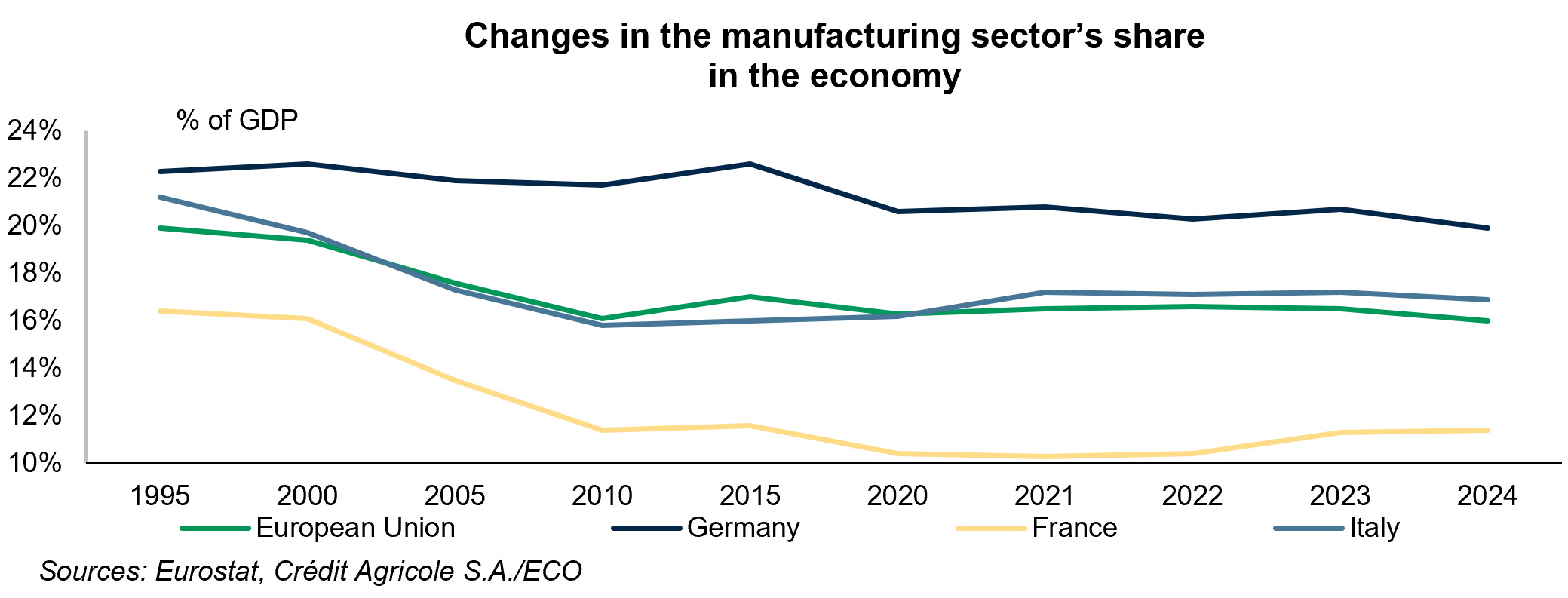
Although declining, the share of manufacturing in GDP remains high in Germany, falling from 22.3 per cent in 1995 to 19.9 per cent in 2024 (11 per cent in France, 17 per cent in Italy).
A high level of specialisation, strong innovation and extensive automation of industrial processes have enabled Germany to partially limit deindustrialisation. However, these strengths are not sufficient to preserve the fabric of the Mittelstand in the face of structural and cyclical pressures.
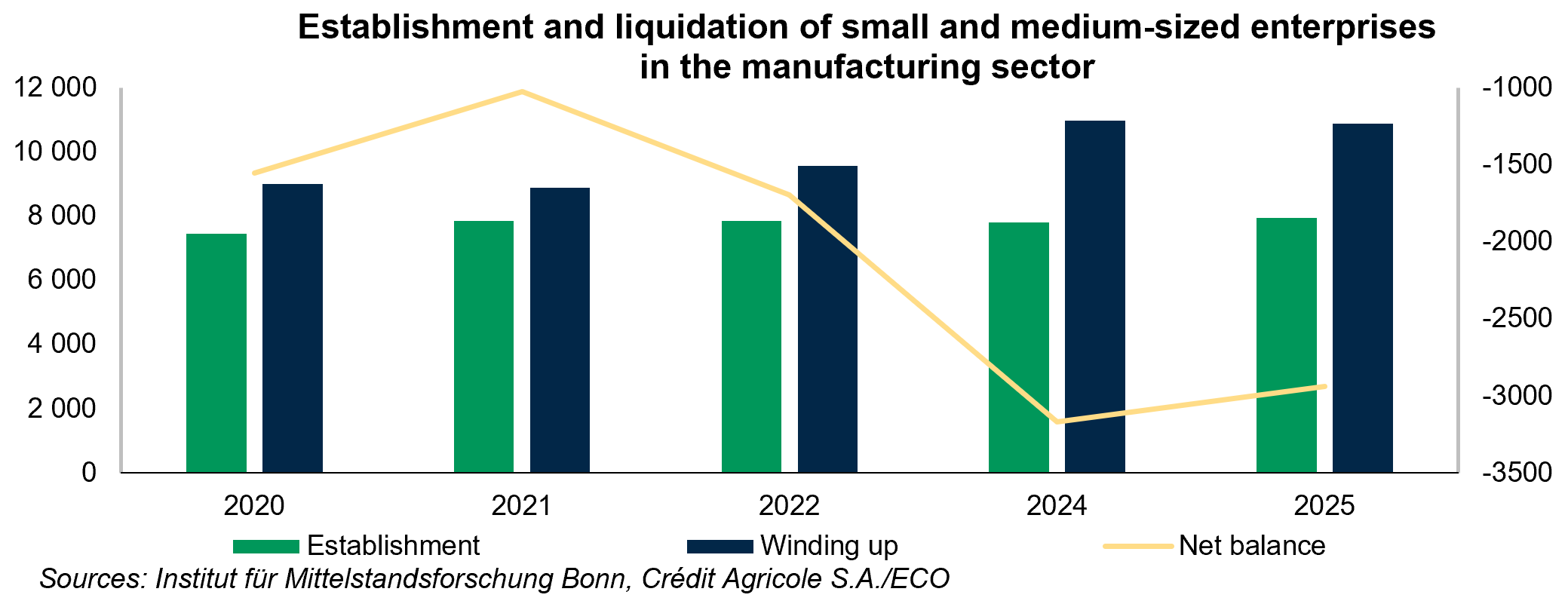
Between 2020 and 2025, the manufacturing sector is showing a sustained negative net balance of business start-ups. Whilst start-ups2 remain broadly stable, liquidations are rising significantly. This trend reflects a weakening of the industrial fabric: the issue is no longer simply one of stimulating the creation of new businesses, but now of preserving the existing fabric, in particular by securing business succession. This trend forms part of a broader context, characterised by rising energy costs, an ageing workforce and intensifying international competition.
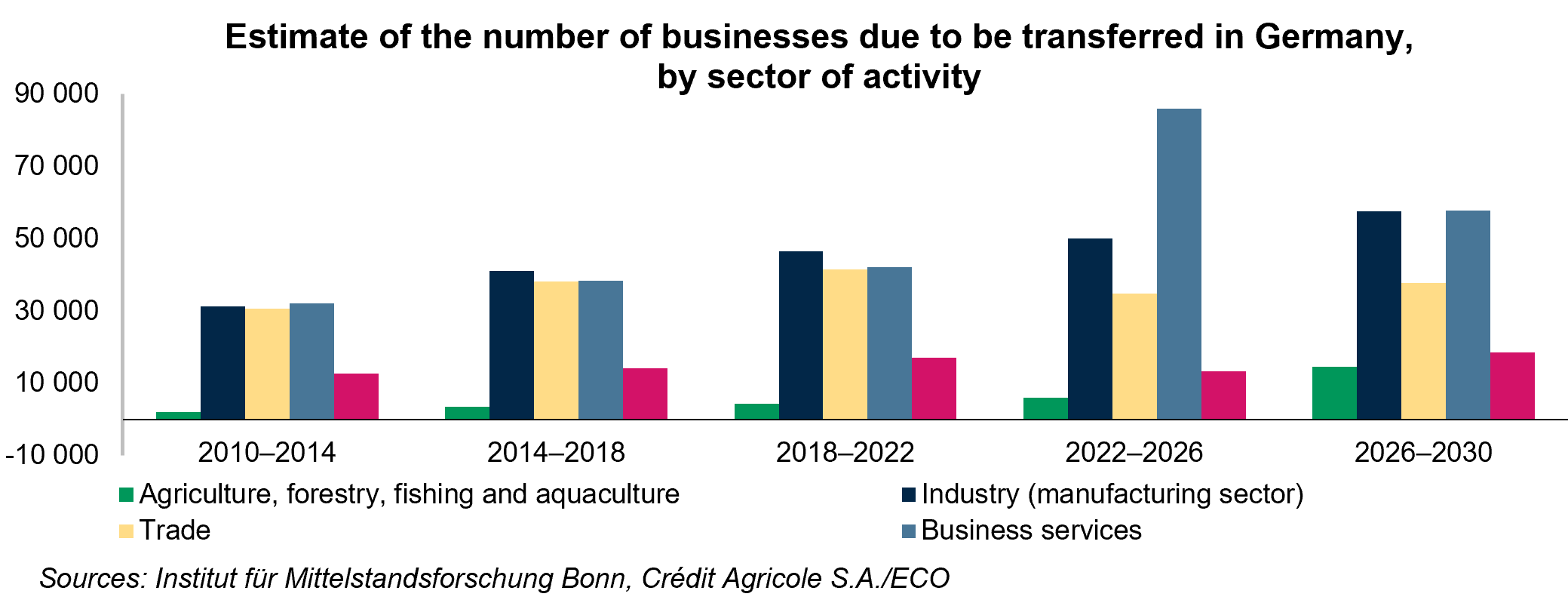
The number of industrial firms affected by business transfers is rising steadily, from 31,300 over the period 2010–2014 to an expected 57,500 over 2026–20303, whilst the total number of business transfers has tended to stabilise in recent years. The share of industry in the total number of business transfers is thus expected to rise from 29 per cent in 2010–2014 to nearly 31 per cent in 2026–2030.
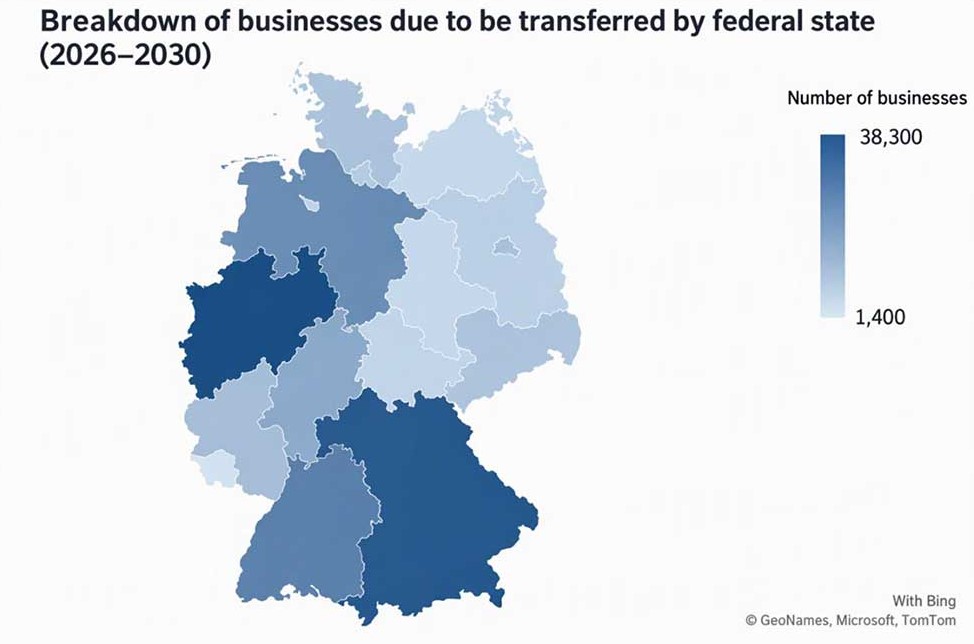
Regional disparities are marked, with a high concentration of businesses (across all sectors) due to be transferred in the main federal states of western and southern Germany, led by North Rhine-Westphalia (38,300), Bavaria (34,500) and Baden-Württemberg (26,200). These regions, historically the most industrialised and most populous, naturally account for a significant proportion of the SME sector.
Preserving industrial SMEs is becoming crucial to safeguarding expertise and maintaining regional value chains, whilst strengthening the country’s industrial competitiveness. Consequently, the ability of Mittelstand companies to modernise their tools and processes is becoming essential.
Industrial automation and digital technologies are strengthening the German model. The country also has a historical advantage in this field, with world-renowned leaders in automation. However, this advantage remains only partially exploited. Whilst the Mittelstand is recognised for its industrial excellence, a significant proportion of these firms have not yet fully integrated digital technologies.
In 2023, the German federal government announced the Manufacturing-X initiative. This programme aims to develop cross-sector technologies and use cases in order to build an open, interoperable and collaborative industrial data ecosystem to support Industry 4.0. For the Mittelstand, Manufacturing-X represents a strategic opportunity to gain access to advanced digital tools, develop new services and strengthen its position in the face of the rise of non-European industrial ecosystems.
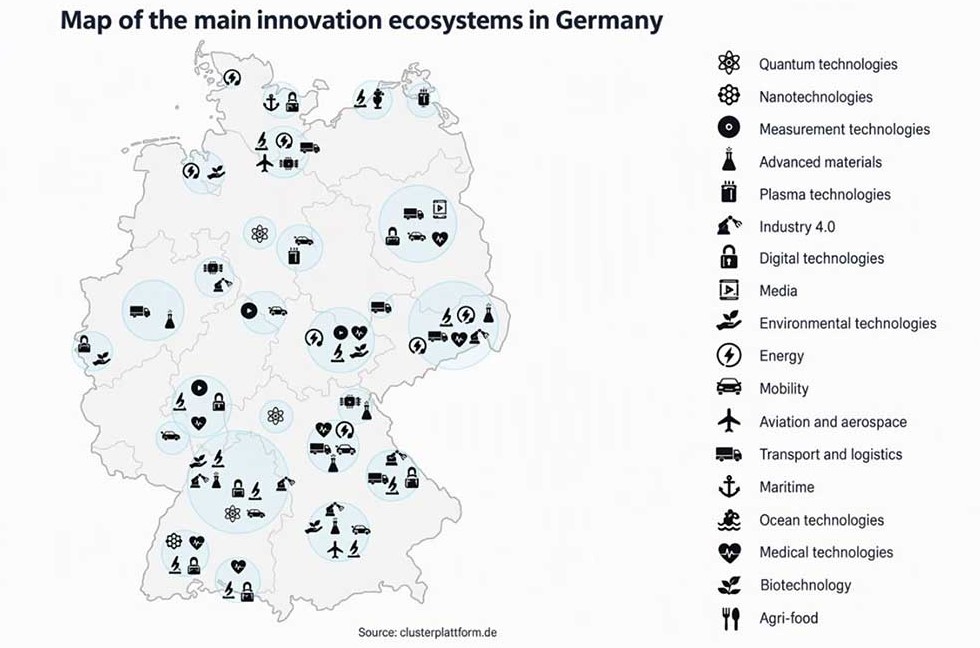
Germany must also draw on its regional innovation clusters4. These ecosystems will play a key role in disseminating innovations and supporting the Mittelstand in its transformation. A strategy based on automation and the systemic integration of technologies will be essential to consolidate Germany’s technological advantage and maintain its competitiveness at European and global level.