Recherche
30 résultat(s) trouvé(s)
Eurozone – Economic Outlook – GDP Flash Estimate: growth is slowing in the core
With GDP growth limited to 0.2 per cent, excluding Ireland, in Q3 2026, the slowdown we had highlighted in our latest forecast has materialised at the heart of the Eurozone and is more pronounced there.
 Paola
MONPERRUS-VERONI
China–US: ‘strategic stability’ put to the test by Chinese ambitions
The start of the 21st century has been marked by growing rivalry between a dominant power, the United States, and a new rival, China. Since 2016, this rivalry has manifested itself across an increasing number of sectors: trade, technology, finance, defence and energy. Each side is building or safeguarding its comparative advantages and dominant positions in order to maintain its attributes of power and...
 Sophie
WIEVIORKA
GEOPOLITICS – What the midterms won’t change: the breakdown of political compromise
The loss of US influence is accelerating. Is this down to the Trump effect? Yes, particularly among allies, but there’s more to it than that. The trend is longstanding and widespread, and points to a fundamental feature of hegemonic cycles: the decline of a power does not simply come down to a change in the balance of power; it has its roots in a crisis within the political and institutional model that...
 Tania
SOLLOGOUB

United Kingdom – 2026-2027 Scenario: Resilience so far, but risks persist
UK GDP growth has continued to surprise on the upside, leading us to revise our forecast for average annual growth in 2026 from 1.1% to 1.4%.
 Slavena
NAZAROVA
Insight – From revival to rebuilding
At the turn of the 2000s, Germany was regarded as the ‘sick man’ of the euro area. Facing high unemployment rates, sluggish growth and public finances weakened by the cost of reunification, the country seemed destined for a slow relative decline. Yet, within a decade, it managed to reinvent itself to become Europe’s main economic driving force.
 Isabelle
JOB-BAZILLE

Germany – A change of strategy for a new geopolitical power
For nearly thirty years, Germany prioritised economic prosperity over a genuine geopolitical strategy. Its model rested on three pillars: American protection, Russian energy and Chinese markets. In a stable international environment, this framework enabled Germany to exert its influence primarily through the economy, whilst maintaining a doctrine of military restraint. However, recent geopolitical...
Residential real estate – Will demographic aging alleviate the housing shortage in Germany?
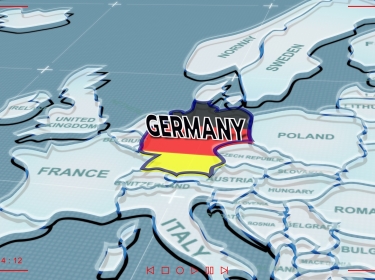
On September 20, 2026, Die Linke won the regional election in Berlin, a first for the radical left-wing party in the capital. The housing crisis was at the heart of Die Linke’s campaign, and this victory reflects Berliners’ frustration with skyrocketing rents and difficulties in accessing housing. The German housing market is indeed facing significant cyclical and structural constraints, which today...
 Juba
IHADDADEN
 Ivana
TERLEVIC

German industry – Facing China: a model under pressure
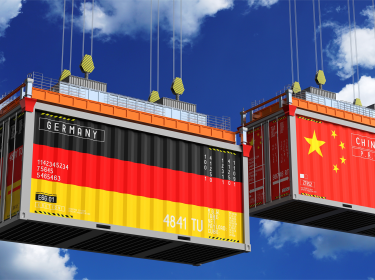
After two decades of relative prosperity, Germany’s strategy based on free trade and its integration into international value chains is facing growing geo-economic fragmentation, Sino-American rivalry, the race for low-carbon technologies and the energy transition in industry. This new landscape has altered the factors determining Germany’s industrial competitiveness in the face of an increasingly...
World – Scenario 2026-2027: layers of risk are piling up
Geopolitical events continue to shape the economic and financial outlook, primarily through energy prices.
 Catherine
LEBOUGRE

Italy – Growth holds steady, inflation picks up
GDP growth consolidated in Q2 at 0.2 per cent. Household consumption rose for a second consecutive quarter, driven by spending on durable goods. Rising gas and oil prices pushed inflation up again in August, whilst confidence continued to improve.
 Sofia
TOZY