Recherche
11 résultat(s) trouvé(s)
German industry – Faced with a wave of business transfers, the survival of the Mittelstand requires its transformation
The German industrial model is now being undermined by structural and cyclical pressures that are likely to persist over the long term. The Mittelstand, the backbone of industry, faces the dual challenge of business succession and transformation. The ability to capitalise on industrial digitalisation and regional innovation clusters will be crucial to Germany’s strategic autonomy.
 Antoine
HUCHEZ
Automotive industry – The German sector in the face of change
For over a century, the automotive industry has been one of the cornerstones of Germany’s industrial strength. Driven by globally recognised brands such as Volkswagen, Mercedes-Benz, BMW and Audi, Germany has established itself as Europe’s leading car manufacturer.
 Veronique
VIGNER
Energy – An energy giant within the European Union
Germany is Europe’s largest energy consumer, ahead of France. It is the largest consumer of crude oil, at nearly two million barrels per day, and has the largest refining capacity in the European Union, whilst also being the EU’s largest consumer of natural gas (around 80 billion cubic metres per year) and coal (around 440 TWh per year).
 Stephane
FERDRIN
Renewable energy – 25 years of the Energiewende: how has it fared in Germany?
Twenty-five years after the launch of the Energiewende, Germany has established itself as Europe’s leading producer of renewable electricity. However, the overall picture remains mixed, with the energy system still reliant on fossil fuels for 75 per cent of gross final energy consumption. The success in the electricity sector has therefore not yet been extended to the system as a whole, raising questions...


 Vincent
GUEGANIC
Pharmaceutical industry – A benchmark market in Europe
Germany leads Europe’s pharmaceutical industry and controls the entire value chain, from research and development to production and marketing. Its strengths lie in the synergy between pharmaceutical companies, biotech firms, manufacturing sites and subcontractors; however, this integrated model faces growing international competition in terms of attractiveness.
 Mathieu
BOUTHEMY

Fintech – In the wake of Wirecard, German fintech is turning its attention to ‘useful’ finance
Long associated with neobanks and the promise of disruption, German fintechhas changed its focus. Since the Wirecard scandal, its centre of gravity has shifted towards compliance, financial infrastructure and the needs of the Mittelstand – that network of SMEs and mid-sized companies which forms one of the cornerstones of the German economy. This shift demonstrates that financial innovation in Germany is...
 Romain
LIQUARD

Technology – Germany’s digitalwirtschaft: revitalising start-ups and leadership in industrial AI
In Germany, the digital sector grew by 3.9 per cent in 2025, reaching €234.8 billion2 in revenue. By 2030, annual growth of 9.7 per cent is expected, bringing the revenue to €389 billion2.
 Menna
SALIM
Insight – From revival to rebuilding
At the turn of the 2000s, Germany was regarded as the ‘sick man’ of the euro area. Facing high unemployment rates, sluggish growth and public finances weakened by the cost of reunification, the country seemed destined for a slow relative decline. Yet, within a decade, it managed to reinvent itself to become Europe’s main economic driving force.
 Isabelle
JOB-BAZILLE
Germany – A change of strategy for a new geopolitical power
For nearly thirty years, Germany prioritised economic prosperity over a genuine geopolitical strategy. Its model rested on three pillars: American protection, Russian energy and Chinese markets. In a stable international environment, this framework enabled Germany to exert its influence primarily through the economy, whilst maintaining a doctrine of military restraint. However, recent geopolitical...
 Paola
MONPERRUS-VERONI
Residential real estate – Will demographic aging alleviate the housing shortage in Germany?
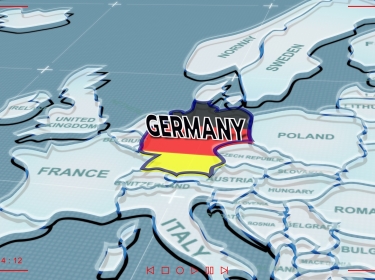
On September 20, 2026, Die Linke won the regional election in Berlin, a first for the radical left-wing party in the capital. The housing crisis was at the heart of Die Linke’s campaign, and this victory reflects Berliners’ frustration with skyrocketing rents and difficulties in accessing housing. The German housing market is indeed facing significant cyclical and structural constraints, which today...
 Juba
IHADDADEN
 Ivana
TERLEVIC